

Genchi Genbutsu y el Círculo de Ohno
«Los datos en manufactura son importantes, por supuesto, pero le doy mayor énfasis a los hechos.» TAIICHI OHNO
El Círculo de Ohno
«Observe la planta de producción sin preconceptos y con la mente en blanco. Repita ‘¿por qué?’ cinco veces por cada problema.» TAIICHI OHNO
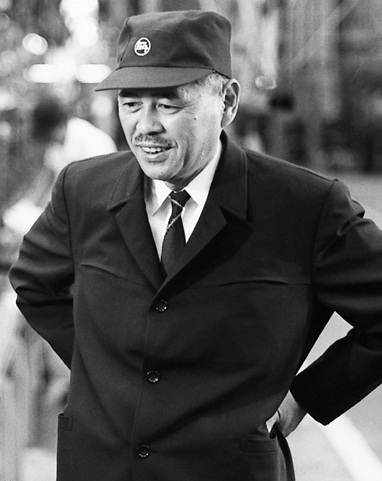 Para muchos un mito, para otros no tanto. Se dice que Taiichi Ohno, destacado fundador del TPS junto a los Toyoda, instruía a los nuevos empleados de la planta con una técnica muy particular. Ohno dibujaba en el piso un círculo con tiza y hacía que el flamante empleado permaneciera parado durante horas dentro de él observando el proceso de fabricación. Lo curioso era que no daba un solo lineamiento, ni hacía comentario alguno al finalizar la jornada. Sólo se dirigía a ellos de manera cordial. Pero, ¿qué buscaba realmente? La respuesta está precisamente en la filosofía del genchi genbutsu. Ohno pretendía que el nuevo empleado viera por sí mismo los problemas en el propio lugar de ocurrencia. Esto hacía que su observación estuviera libre de subjetividad, del peso de opiniones ajenas, de teorización innecesaria. Por esta razón, el ‘maestro’ no hacía ningún comentario para no influir en el resultado. Real o no, el Círculo de Ohno no deja de ser sumamente interesante como concepto.
Jeffrey Liker, en su obra ‘The Totoya Way‘ (2003) menciona a genchi genbutsu como uno de los 14 principios fundamentales del TPS. El reconocido autor tuvo la enriquecedora oportunidad de conocer en persona a Teruyuki Minoura, quien ocupó el puesto de presidente de Toyota Motor Manufacturing en los Estados Unidos. Transcribimos un extracto de la entrevista que Liker tuvo con Minoura, en la que se menciona el uso del círculo:
T.M.: El Sr. Ohno queria que dibujemos un círculo en el piso de la planta y luego nos decía que nos paremos dentro de él, miremos el proceso y pensemos por nosotros mismos.
J.L.: ¿Cuánto tiempo estuvo parado dentro del círculo?
T.M.: ¡8 horas!.
J.L.: ¡¿8 horas?!
T.M.: En la mañana, el Sr. Ohno nos pidió que permaneciésemos dentro del círculo hasta el almuerzo. Luego más tarde regresó el Sr. Ohno a chequear, y me preguntó qué veía. Y por supuesto, yo le respondí (reflexionando): «hubo muchos problemas con el proceso». Pero el Sr. Ohno no me oía. Sólo me observaba.
J.L.: ¿Y qué pasó al final del día?
T.M.: Ya se acercaba la hora de cena. El regresó a verme. No me dió ninguna retroalimentación, simplemente me dijo amablemente: «vete a casa».
(Fuente: ‘The Toyota Way‘ – Jeffrey Liker, 2003)
Interesante, ¿no?. Más allá de ser una pieza irremplazable de la estructura del TPS, genchi genbutsu puede ser utilizado en infinidad de sistemas o procesos. Mirar en forma directa lo que está sucediendo nos permite reconocer, por ejemplo, fuentes de desperdicios (muda), tiempos mal utilizados, movimientos innecesarios u operarios con formación deficiente.
Algo a destacar es que la técnica aplica a todas las jerarquías dentro de la organización. Esto lo hace poderoso, ya que los gerentes y los altos directivos toman contacto directo con el proceso y no basan sus decisiones en comentarios de terceros. Gracias a esto, son posibles los cambios importantes y radicales. Los directivos deben ‘ponerse las botas’ y ‘ensuciar sus manos’ para comprender realmente lo que sucede y actuar en consecuencia, en pro de la mejora continua.
«Manufacturing data is important, of course, but I give more emphasis to the facts.» TAIICHI OHNO

Genchi Genbutsu is one of the most revolutionary concepts that introduced the Toyota Production System (TPS), and also one of the most difficult to assimilate and adopt by Western entrepreneurs. The idea is very simple: every situation or problem is easier to understand by going to the real place where it happens. This allows us to obtain much more objective conclusions than those that another person can give us, or what we see through indicators or results. The Japanese expression Genchi Genbutsu can literally be translated as ‘the local and the real’, although many assimilate it as ‘go and see’ or the widely spread ‘go and see’, the English name that adopted this philosophy. The real place where things happen is called the genba (現場), a Japanese term whose meaning is «the place of the facts» or «the scene of the crime». Within the lean philosophy, going to the genba (or gemba) and traversing it to analyze the situation is what is known as gemba walk (by the very action of ‘walking it’), mixing words from the English language and the Japanese language.
The Circle of Ohno
«Observe the production plant without preconceptions and with a blank mind, repeat ‘why?’ five times for each problem. » TAIICHI OHNO
For many a myth, for others not so much. It is said that Taiichi Ohno, outstanding founder of the TPS together with the Toyoda, instructed the new employees of the plant with a very particular technique. Ohno drew a circle on the floor with chalk and made the brand new employee stand for hours inside him observing the manufacturing process. The funny thing was that he did not give a single guideline, nor did he comment at the end of the day. He only addressed them cordially. But what was he really looking for? The answer lies precisely in the genchi genbutsu philosophy. Ohno wanted the new employee to see for himself the problems in the place of occurrence. This made his observation free of subjectivity, of the weight of other people’s opinions, of unnecessary theorization. For this reason, the ‘teacher’ did not make any comments so as not to influence the result. Real or not, the Circle of Ohno does not stop being extremely interesting as a concept.
Jeffrey Liker, in his work ‘The Totoya Way’ (2003) mentions genchi genbutsu as one of the 14 fundamental principles of TPS. The renowned author had the enriching opportunity to meet in person Teruyuki Minoura, who held the position of president of Toyota Motor Manufacturing in the United States. We transcribe an excerpt from the interview that Liker had with Minoura, in which the use of the circle is mentioned:
T.M .: Mr. Ohno wanted us to draw a circle on the floor of the plant and then he told us to stand inside it, look at the process and think for ourselves.
J.L .: How long was he standing inside the circle?
T.M .: 8 hours !.
J.L .: 8 hours ?!
T.M .: In the morning, Mr. Ohno asked us to stay inside the circle until lunch. Then later Mr. Ohno returned to check, and he asked me what I saw. And of course, I answered (reflecting): «there were many problems with the process». But Mr. Ohno did not hear me. He was just watching me.
J.L .: And what happened at the end of the day?
T.M .: Dinner time was approaching. He came back to see me. He did not give me any feedback, he simply told me kindly: «go home.»
(Source: ‘The Toyota Way’ – Jeffrey Liker, 2003)
Interesting, right?. Beyond being an irreplaceable piece of the structure of the TPS, genchi genbutsu can be used in an infinity of systems or processes. Looking directly at what is happening allows us to recognize, for example, sources of waste (muda), times badly used, unnecessary movements or workers with poor training.
Something to emphasize is that the technique applies to all hierarchies within the organization. This makes it powerful, since managers and senior managers make direct contact with the process and do not base their decisions on comments from third parties. Thanks to it, important and radical changes are possible. Managers must ‘put on their boots’ and ‘dirty their hands’ to really understand what is happening and act accordingly, in favor of continuous improvement.[:]