

Hoshin Kanri: planificación Estratégica
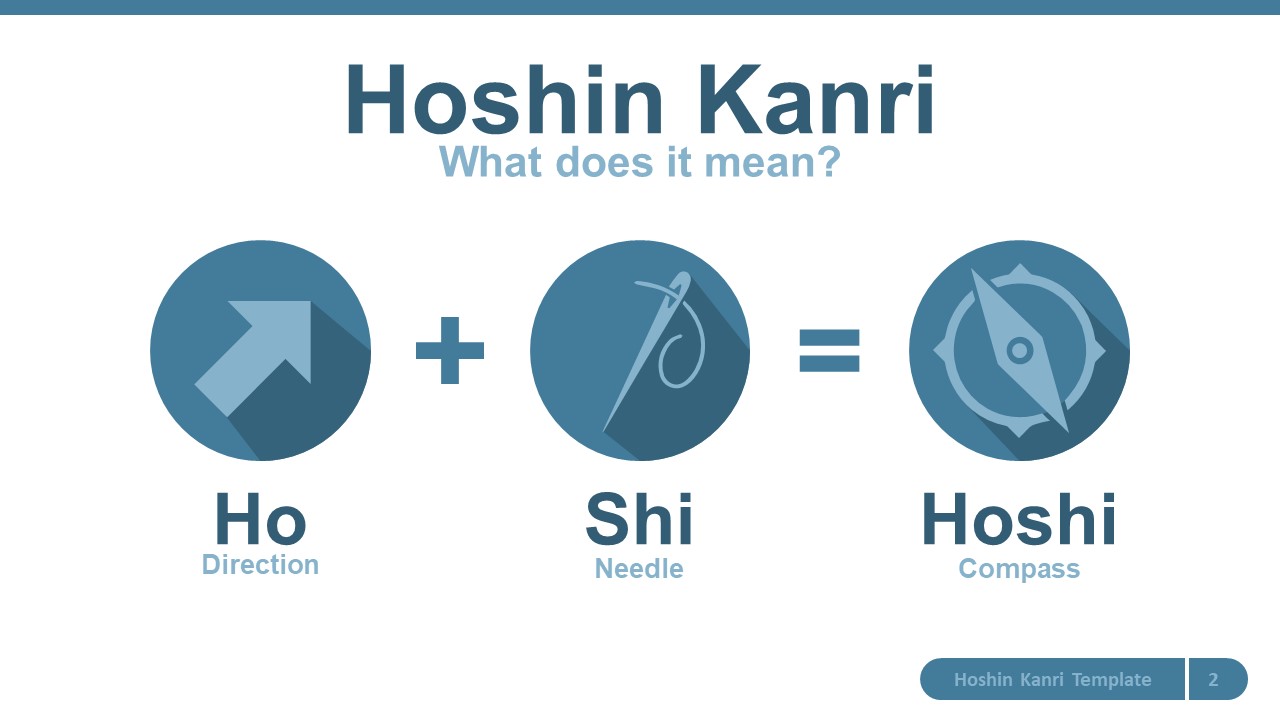
El Hoshin Kanri es un método o sistema de trabajo basado en la cooperación de toda la empresa para alcanzar los objetivos estratégicos a largo plazo y el plan de gestión a corto plazo.
“Hoshin” puede traducirse del japonés como “brújula” y “kanri” como administración o control.
Principalmente, lo que persigue el Hoshin Kanri es que toda la organización se oriente en una sola dirección: la consecución de los objetivos, tomando sus miembros la iniciativa.

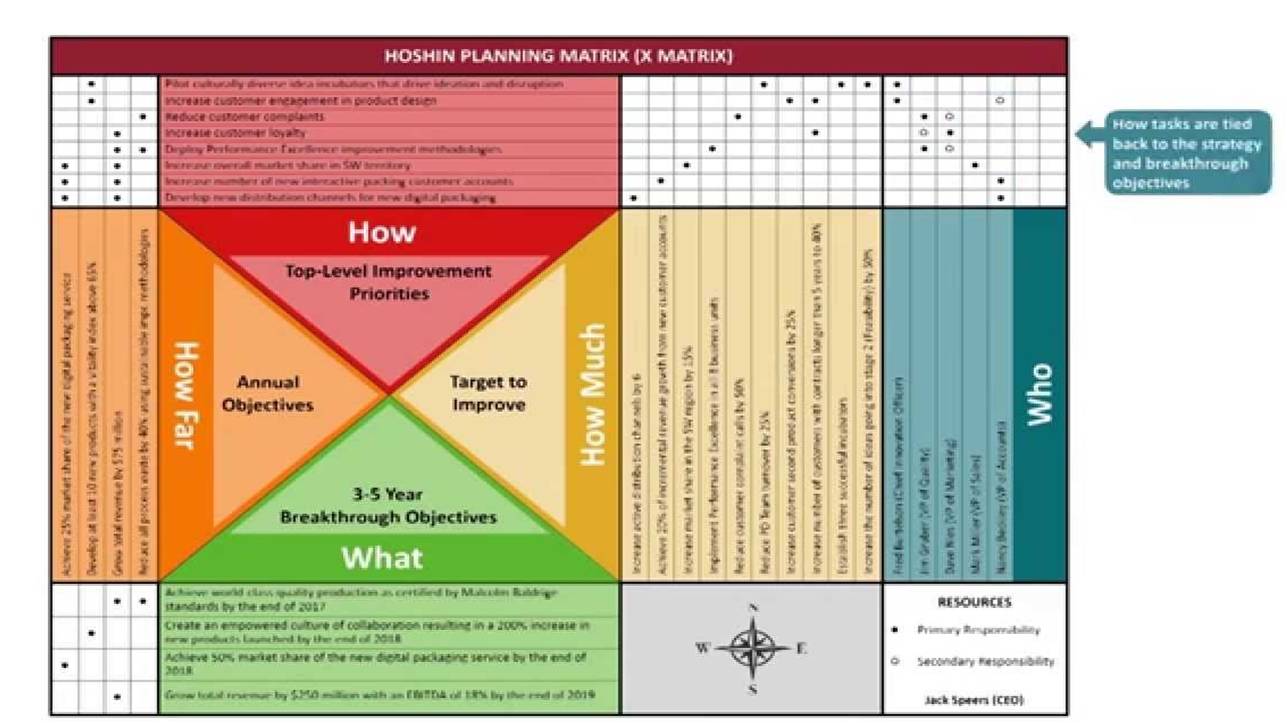
Es un modelo que se desarrolla en 7 pasos:
1. Identificar las claves del negocio
2. Establecer objetivos cuantificados de negocio
3. Definir la visión global y las metas
4. Desarrollar las estrategias para alcanzar las metas
5. Determinar los planes de acción (tácticas y objetivos) para cada estrategia
6. Establecer indicadores que midan el rendimiento de cada proceso
7. Revisión
Cinco ventajas del Hoshin Kanri, por si no te has convencido todavía de las bondades del modelo
1. Alineamiento y motivación: Se convierte en una de las principales herramientas de comunicación en la organización y por tanto permite la implicación de todos los trabajadores hacia la consecución de los objetivos.
2. Foco: Se concentra en pocos objetivos críticos para el éxito. Los recursos son limitados y no se puede llegar a todo a la vez. Es el refrán “el que mucho abarca, poco aprieta” de toda la vida, pero dicho en bonito.
3. Enfoque a la mejora y a los objetivos: Reinvidica el valor de la estrategia (pensar) y el papel de todas las personas. Los recursos son limitados, pero el desarrollo de las personas no… por eso, apoyado en las personas, es fiel a la filosofía Kaizen cuando afirma que la mejora es infinita.
4. Descentralización: Las estrategias y los planes se despliegan en toda la organización, permitiendo la delegación y asunción de responsabilidades por todos sus miembros.
5. Aprendizaje: Tan importante es definir correctamente los objetivos y las estrategias, como la medición de los procesos que llevan al éxito. El Hoshin Kanri es un sistema que pone especial énfasis en medir y documentar los procesos, permitiendo la generación de un “know how” para poder repetir el éxito.
Hoshin Kanri is one of the many secrets of the success of Japanese organizations. A concept that was born back in the decade of the ’50 by the hand of Yoji Akao, today widely recognized as the creator of the powerful method of deployment of the quality function (QFD)). Before describing what it is, let’s analyze what the expression means. Hoshins means «point in one direction», «give course to something», or it can also be interpreted as «compass». Kanri specifically means «administration». Hoshin Kanri is just that, managing in a certain direction, with a «north». For this, this method or management system seeks the establishment of long-term strategic objectives in addition to short-term action plans. The curious and differentiating thing is that these objectives are not only defined by Senior Management but are specified by all the staff of the organization.
Defining common objectives and goals, with consensus among areas, is not an easy task but it is the only way to get everyone involved in the continuous improvement of the organization as a unit. One of the biggest challenges is to encourage the staff, since it is difficult to keep them motivated when the results do not appear immediately. If there is not a quick «reward», many may tend to lose interest. Here it is of the utmost importance that those responsible for the area, as well as the Directorate, have a clear sense of leadership. Toyota has been able to implement it successfully, without a doubt. Their managers have managed to understand the essence of the method and transmit it passionately, infecting their subordinates and actively involving them in the definition, measurement and fulfillment of objectives.
Hoshin Kanri is also known as Policy Deployment. It is usually developed as a cascade of objectives that start from the superior commands and go down level to level, assigning in each step particular objectives that are aligned with those of higher levels. In all cases, the objectives must be concise and measurable. There is no room for ambiguities or subjectivity.
It is very common to see in organizations with hoshin kanri implemented that the objectives are raised annually. But longer-term objectives may also appear. Toyota, for example, has three-year targets in some of its areas.
Each person in the organization knows their goals perfectly and dedicates their effort to achieving them. In order to inform their superiors of the partial results that are obtained, two methodologies are usually used. On the one hand, the technique of hourensou, which is in itself a way of communicating with the highest hierarchy. Superiors usually have little time, so they should be provided with updated and synthesized information periodically. Managers usually go directly to talk to workers at their positions. The genchi genbuchu technique is highly related to this way of working. Another way to obtain feedback from subordinates is by holding periodic and planned meetings. There must be an extremely fluid communication in both directions, from top to bottom and from bottom to top.
Hoshin Kanri became one of the hallmarks of Total Quality Management (TQM). As always, for it to work as a system there must be a high commitment on the part of the Management. You must select few objectives, but be critical and well representative. The correct indicators must be chosen to measure the achievement of them and to detect deviations that must be corrected with concrete actions.[:]